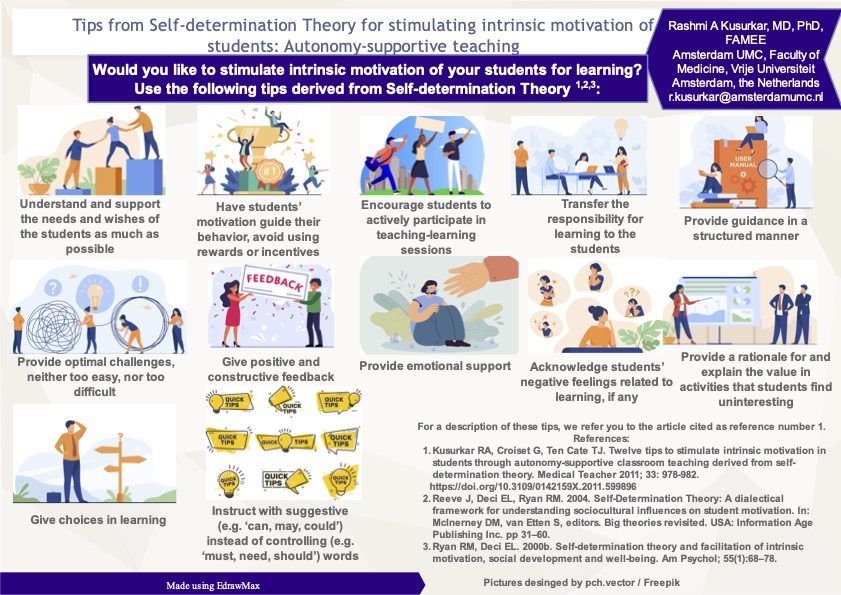
Infographic: Ways to be Autonomy-Supportive for Teachers
June 11, 2021 by Lemos Kelly
By Rashmi Kusurka
Continue Reading
June 11, 2021 by Lemos Kelly
By Rashmi Kusurka
Continue Reading

September 23, 2020 by Lemos Kelly
By shopping with Amazon Smile, you can further support the work done here at CSDT.
Continue Reading

April 16, 2020 by Shannon
Based on SDT principles, Kenneth Resnicow and colleagues developed resources to support practitioner communication skills during the COVID-19 pandemic.
Continue Reading

April 1, 2020 by Shannon
Since the beginning of the Covid-19 lockdown, SDT researchers have collected a large data sample on Belgian citizens’ motivation which has become a motivation barometer that reveals interesting findings.
Continue Reading
August 9, 2015 by Shannon
Connect Australian Catholic University Faculty Page Research Gate Page Google Scholar Page LinkedIn Twitter Media/Speaking Inquires email CSDT Richard M. Ryan, Ph.D., is a Professor at the Institute for Positive Psychology & Education at the Australian Catholic University, North Sydney, where he has been acknowledged by The Australian as one of Australia’s top researchers listing him on the...
Continue Reading
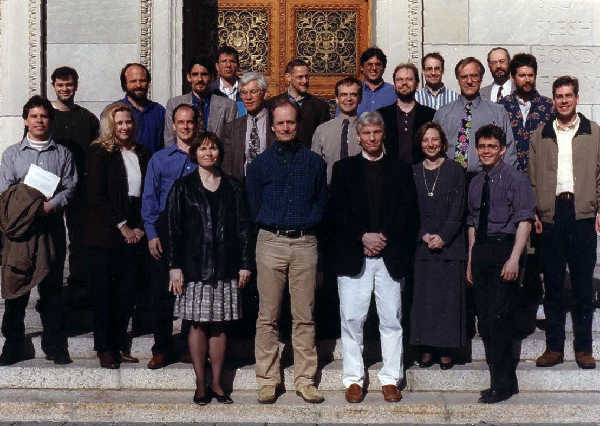
Overview|1st Conference Picture | 1999 Conference Book
Reference: Deci, E. L., & Ryan, R. M. (Eds.), (2002). Handbook of self-determination research. Rochester, NY: University of Rochester Press.
Available from the University of Rochester Press
668 Mt. Hope Avenue, Rochester, NY 14620. Phone orders: (585) 273-5779.
Chapter 1 An Overview of Self-Determination Theory
– Richard M. Ryan & Edward L. Deci
Chapter 2 Intrinsic and Extrinsic Motivation: A Hierarchical Model
– Robert J. Vallerand & Catherine F. Ratelle
Chapter 3 The Self-Concordance Model of Healthy Goal-Striving: When Personal Goals Correctly Represent the Person
– Kennon M. Sheldon
Chapter 4 The Integrating Self and Conscious Experience
– Holley S. Hodgins & C. Raymond Knee
Chapter 5 Distinguishing Three Ways of Being Highly Motivated: A Closer Look at Introjection, Identification, and Intrinsic Motivation
– Richard Koestner & Gaëtan F. Losier
Chapter 6 Sketches for a Self-Determination Theory of Values
– Tim Kasser
Chapter 7 Self-Generated Changes in Intrinsic Motivation as a Function of Social Perception
– T. Cameron Wild & Michael E. Enzle
Chapter 8 What Makes Parents Controlling?
– Wendy S. Grolnick & Nicholas H. Apostoleris
Chapter 9 Self-Determination Theory Applied to Educational Settings
– Johnmarshall Reeve
Chapter 10 A Motivational Analysis of Self-Determination for Pro-Environmental Behaviors
– Luc G. Pelletier
Chapter 11 Improving Patients’ Health Through Supporting the Autonomy of Patients and Providers
– Geoffrey C. Williams
Chapter 12 Intrinsic Need Satisfaction in Organizations: A Motivational Basis of Success in For-Profit and Not-For-Profit Settings
– Paul P. Baard
Chapter 13 Self-Determination Theory and Participation Motivation Research in the Sport and Exercise Domain
– Christina M. Frederick-Recascino
Chapter 14 The Relation of Perceived Control and Self-Determination in Coping
– Ellen Skinner & Kathleen Edge
Chapter 15 Distinguishing Between Secure and Fragile Forms of High Self-Esteem
– Michael H. Kernis & Andrew W. Paradise
Chapter 16 The Need for Competence
– Andrew J. Elliot, Holly A. McGregor, & Todd M. Thrash
Chapter 17 Three Views of the Agentic Self: A Developmental Synthesis
– Todd D. Little, Patricia H. Hawley, Christopher C.Henrich, & Katherine W. Marsland
Chapter 18 An Educational-Psychological Theory of Interest and its Relation to SDT
– Andreas Krapp
PART V: Concluding Comments
Chapter 19 Self-Determination Research: Reflections and Future Directions
– Edward L. Deci & Richard M. Ryan
The University of Rochester Motivation Research Group
SDT is an approach to studying motivation and personality that has evolved over the past 30 years from psychological research conducted by Edward L. Deci, Richard M. Ryan, and their collaborators from around the world. Deci and Ryan are professors in the Department of Clinical and Social Sciences in Psychology at the University of Rochester, where they direct a research program in human motivation that draws together a group of psychologists, graduate students, post-doctoral fellows, and visiting scholars with diverse backgrounds who are engaged in a variety of research programs, both basic and applied, including studies of volition and autonomy, achievement motivation, and interpersonal relationships.
Institute for Research and Reform in Education
The president of IRRE is James P. Connell who was formerly a faculty member in the Human Motivation Program at the University of Rochester, where he collaborated on research with Richard M. Ryan and Edward L. Deci. Currently, IRRE uses some of the motivational ideas contained within Self-Determination Theory to do school reform and youth development.
Motivation & Emotion
Motivation and Emotion is a premier specialty journal in its area and has had a long reputation for publishing significant empirical research and reviews focused on human motivation and affect. The journal emphasizes empirical research but may also include theoretical and methodological articles of either a basic or applied nature from any area of psychology and behavioral science, provided that the focus is on motivation and/or emotion. All submissions are handled electronically; to submit a manuscript, please logon to: http://moem.edmgr.com
Motivation in Educational Research Laboratory (MERL)
A part of Singapore’s National Institute of Education, MERL‘s main focus is on motivational issues in education. The research lab adopts Self-Determination Theory as the core theory in guiding research, and also integrating other motivational theories in their research. MERL’s aim is to translate research findings into practical guides for teachers and practitioners. In Asia, MERL is the only satellite laboratory of the Rochester Human Motivation Lab, led by Associate Professors John Wang, Liu Woon Chia and Nikos Chatzisarantis, and is advised by Professor Tan Onn Seng. To find out more about MERL, click here.
The Center for a New American Dream
The Center for a New American Dream helps Americans to reduce and shift their consumption to improve quality of life, protect the environment, and promote social justice. Working with individuals, institutions, businesses, and communities to conserve natural resources, counter the commercialization of our culture, support community engagement, and promote positive changes in the way goods are produced and consumed.
Relevant Professional Associations